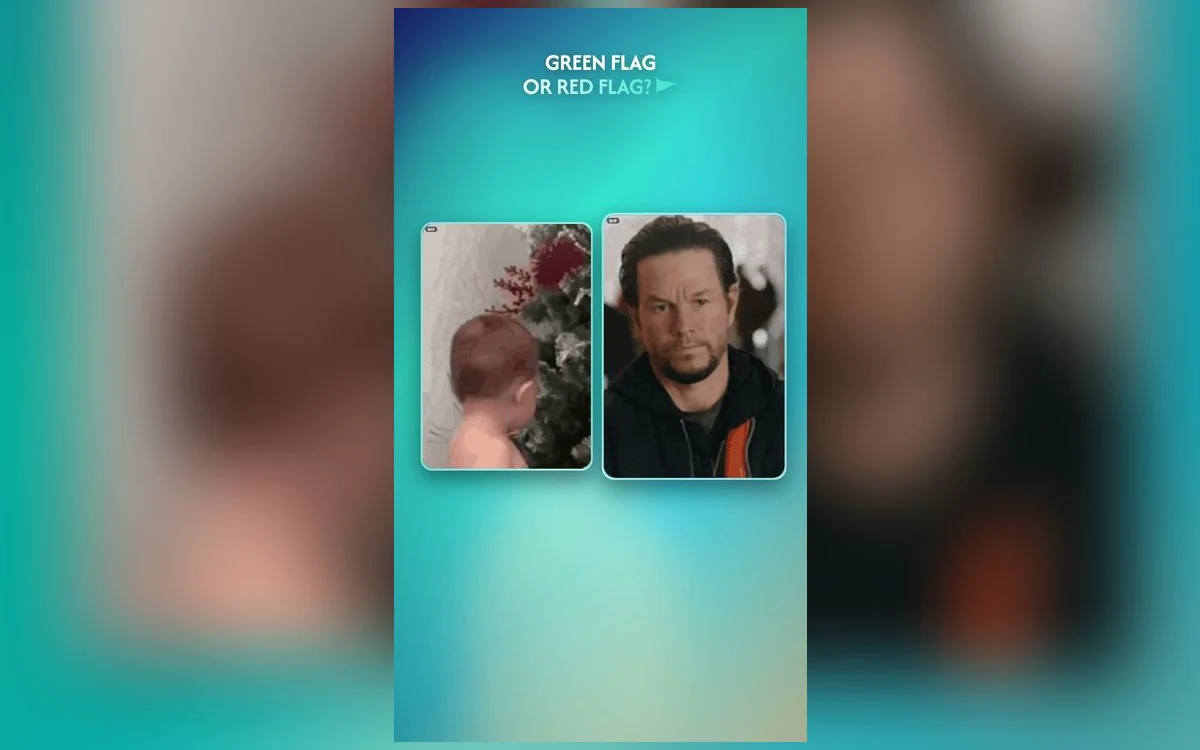
Someone in the chat says something outrageous, and you have three ways to answer without typing a word. A GIF, a sticker, or a meme. Most people reach for whichever one is nearest and hope for the best.
They are not interchangeable. Each does a different job, and sending the wrong format is why a reply sometimes lands with a thud even when the joke was fine.
The differences are easy to hold in your head once you have seen them laid out.
Three formats, three different jobs
A GIF is a short silent clip that loops. Its power is motion and timing, which means it can carry a performance: a pause, a double take, a slow build.
A sticker is a small still or animated image with no background, usually a character or cut-out. It sits on top of the conversation rather than inside it, and is about tone more than content.
A meme is an image with a caption, where the joke lives in the pairing. It needs the other person to recognise the format, and rewards them when they do.
Put simply: GIFs perform, stickers signal, memes comment.
GIFs: when the timing is the joke
Use a GIF when the reaction needs a beat. Someone slowly turning to look at the camera. A person walking into a room and immediately walking out. A face that starts pleased and ends horrified.
None of that survives as a still image. The comedy is in the change over time.
GIFs are also the most universal of the three. They send into almost any chat app, need no shared reference, and a stranger in a work thread will read a nodding GIF exactly as you meant it. That makes them the safe default when you do not know the room.
Stickers: small, fast, and about you
Stickers are the lightest of the three. Quick to send, they do not dominate the screen, and they read as a gesture rather than a statement.
On recent iOS versions you can make your own by lifting the subject out of a photo, and animated ones from Live Photos. They live in a sticker drawer reached from the emoji keyboard, and in Messages you can drop one onto a specific bubble instead of sending it as its own message. Availability and exact steps vary by iOS version and device.
That bubble behaviour is the real reason to use stickers. Putting a small reaction on the exact message you are answering is far clearer than sending a GIF three messages later and hoping people work out what it meant.
Stickers are personal in a way the other two are not, as well. A sticker of your own dog means something a stock reaction never will.
Memes: a caption doing the work
A meme carries an idea, not just a mood. That is its advantage and its risk.
It works when the group already knows the format. Recognition is half the pleasure, and a well-chosen meme can summarise a whole argument in one image. That is why they thrive in chats about work, football or a shared hobby.
It fails when the reference is not shared. A meme built on a format someone has never seen leaves them staring at a picture with confusing words on it, and there is no polite way to ask.
Memes also age faster than the other two, sometimes within weeks. A GIF of a shrug works forever; a meme from three months ago can read as out of step.
The one-question test
Before you send, ask: am I reacting, or am I saying something? If you are reacting to what someone just said, use a sticker on their message or a short GIF. If you are making a point that needs words, use a meme. That single distinction fixes most misfired replies, because the usual mistake is sending a meme when a two-second reaction would have done.
Pick by the room, not by the joke
Who you are talking to matters more than which format is funniest.
In a work chat, GIFs are the safest choice. They are neutral and assume nothing about the other person's sense of humour. Memes in a work thread can go wrong quickly, since half the room may not share the reference.
In a close friends group, stickers and memes both work well, because the shared context is already there. It is the one place a niche in-joke beats a polished reaction.
One-to-one with someone you do not know well, keep it to GIFs and keep them short. A friendly nodding clip carries no risk. A meme is an assumption about a person you cannot yet make.
How each one fails
GIFs fail by being too long or too frequent. A five-second clip stops a fast conversation, and a run of them makes the thread hard to scroll.
Stickers fail by repetition. The same one twenty times a day becomes background noise and stops signalling anything at all.
Memes fail on reference and on timing, either because the group does not know the format or because the moment has already passed.
Emoji sit alongside all three as the lightest option, still the right answer when a reaction only needs to acknowledge something.
Quick answers
What is the difference between a GIF and a sticker?
A GIF is a short looping clip in a rectangular frame that plays like a small silent video. A sticker is a cut-out image with no background, often static, and it can sit on top of a message bubble. GIFs perform an action; stickers add tone.
Are memes and GIFs the same thing?
No, though they overlap. A meme is defined by its format and caption, and can be a still image or animated. A GIF is defined by being a short silent loop, and does not need to be a meme at all. A meme GIF is simply both at once.
Which format is best for work chats?
Short GIFs. They are widely understood, need no shared reference, and read as friendly rather than in-jokey. Save memes for teams you know well, and keep to one per conversation so the thread stays readable.
Can I use all three from one keyboard?
Largely, yes. A keyboard app like GIF Keyboard: Memes & Emoji covers GIFs, meme images and emoji in one place across every app you type in, while photo-based stickers are handled by iOS in the sticker drawer.
Where to get it
GIF Keyboard: Memes & Emoji is a free iPhone keyboard that puts GIFs, memes and emoji behind one search box in whichever app you happen to be typing in. You can get it here: GIF Keyboard: Memes & Emoji.
Decide whether you are reacting or commenting, and the format picks itself.